
Most people come to Chandigah to see the modernist architecture. It was India’s first new city post independence and some of the main buildings were designed by the Swiss-French architect Le Corbusier. We did the architecture tour too, but before that we went to see the main reason I came to Chandīgarh – a pile of rubbish!
When Chandīgarh was being developed in the 1950s a local traffic officer called Nek Chand started to secretly transform a wooded area that he knew there was no plans to develop as it had been designated as a nature area. He collected discarded waste material from around the city and from a small shed he’d constructed in the forest, began to build a remarkable ‘garden’. He carried on creating it for nearly 20 years before it was discovered. To their credit, the local government recognised it as an amazing creation. Rather than bulldoze it, they actually started to pay him to continue his creation. The garden was eventually opened to the public so everyone can now enjoy its secrets.


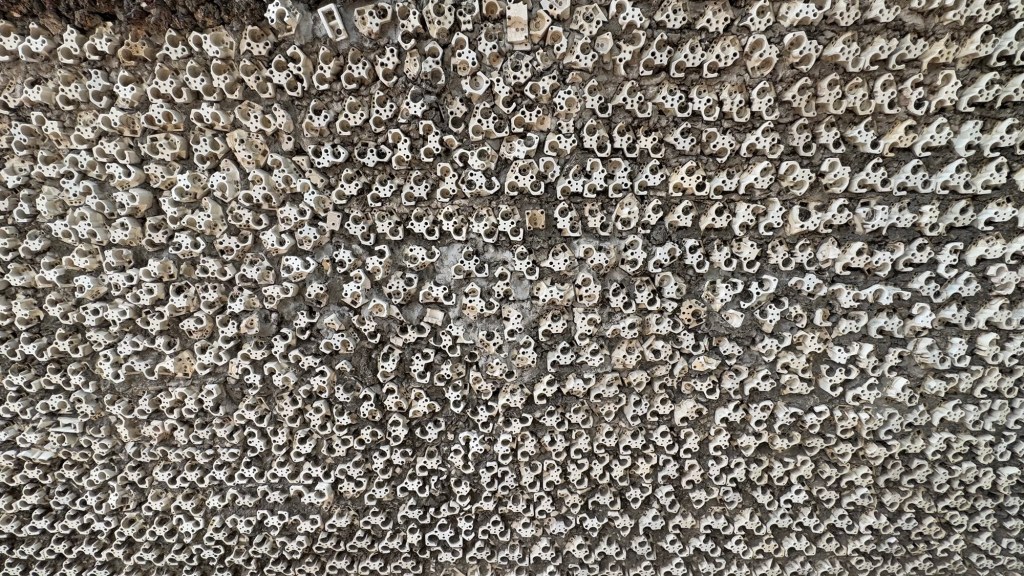
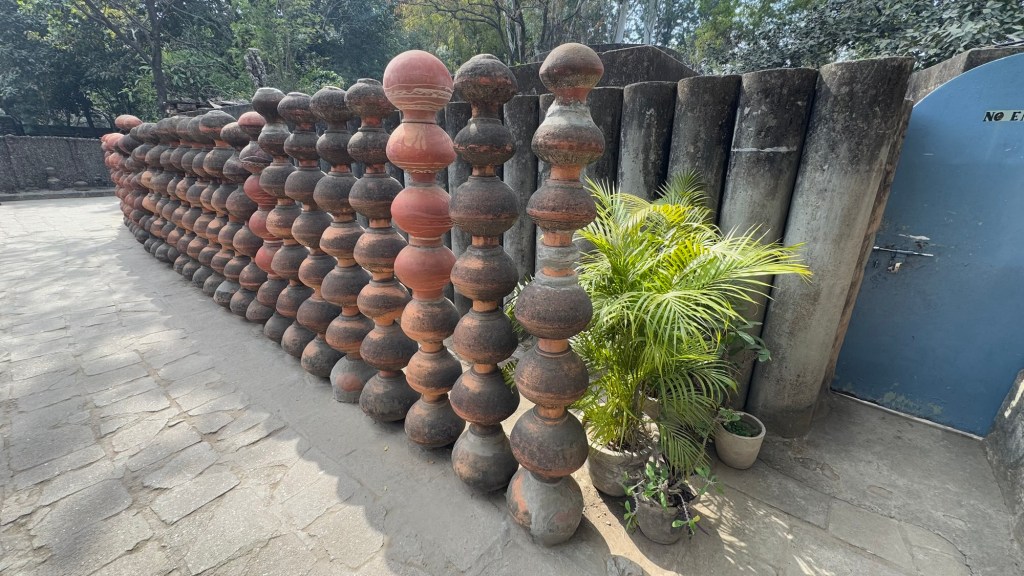


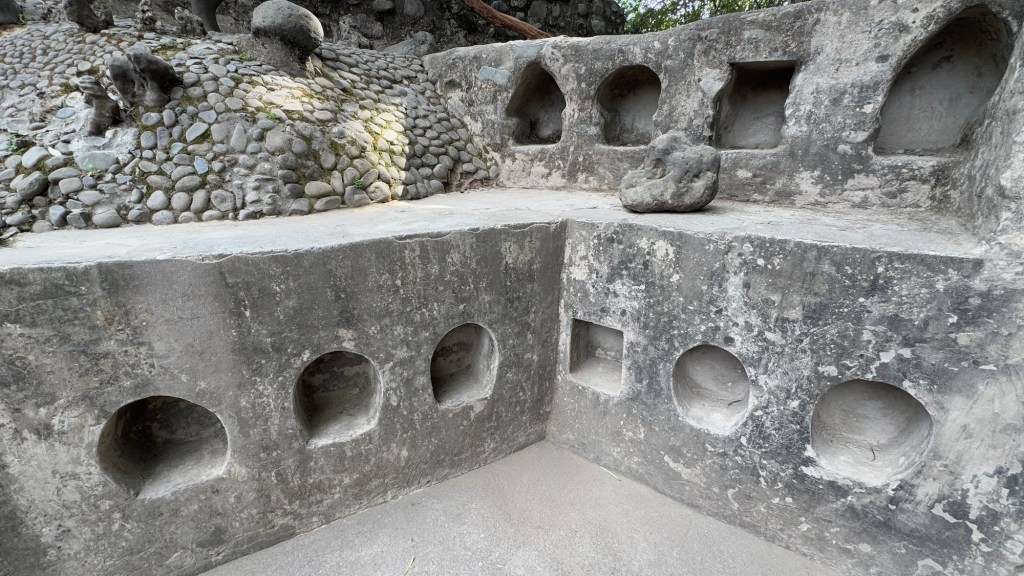


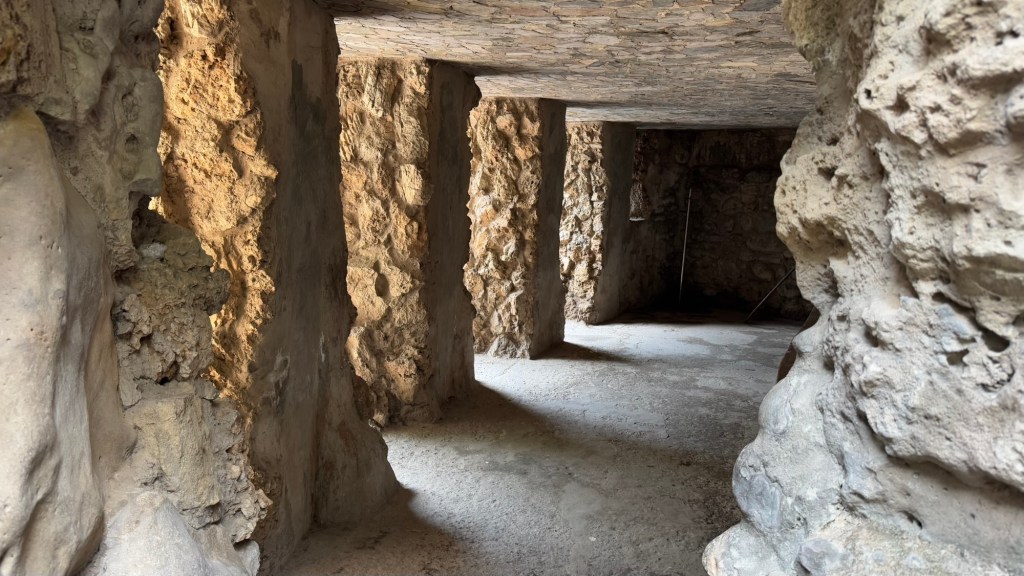
It’s certainly not like any other garden in India, or elsewhere in the world that I’ve visited for that matter. We enter through a small low arch in a wall made of piled stones and concrete. Having to stoop down to enter adds to the sense of entering a secret world. The path takes us along narrow high stone gullies bringing us out into small openings with eclectic sculptures created entirely from waste. There are pots piled on top of each other to create screens and fences of old fluorescent light tubes. Walls are covered in mosaic made from things like broken plates, cups, bowls and even bathroom suites.
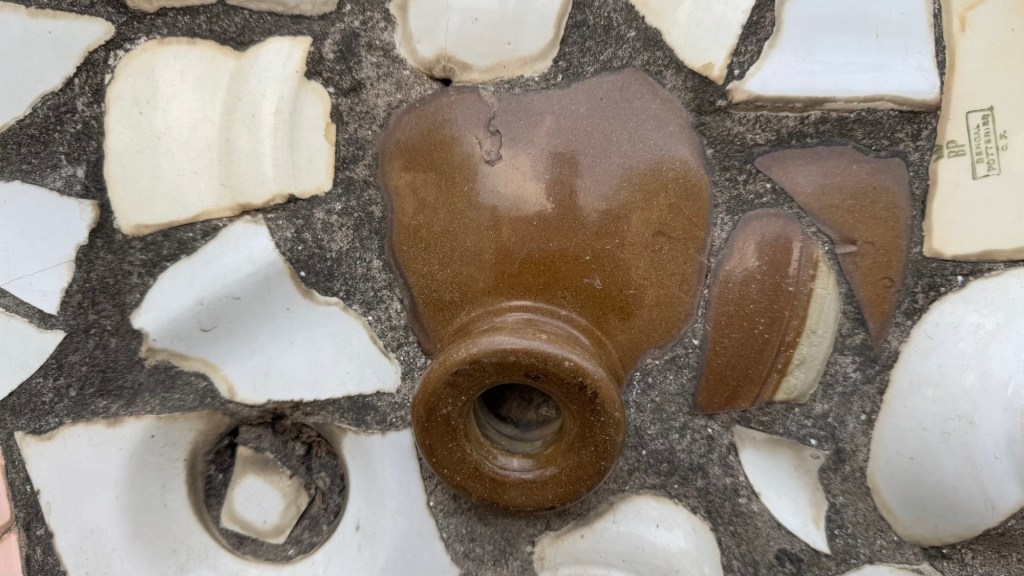

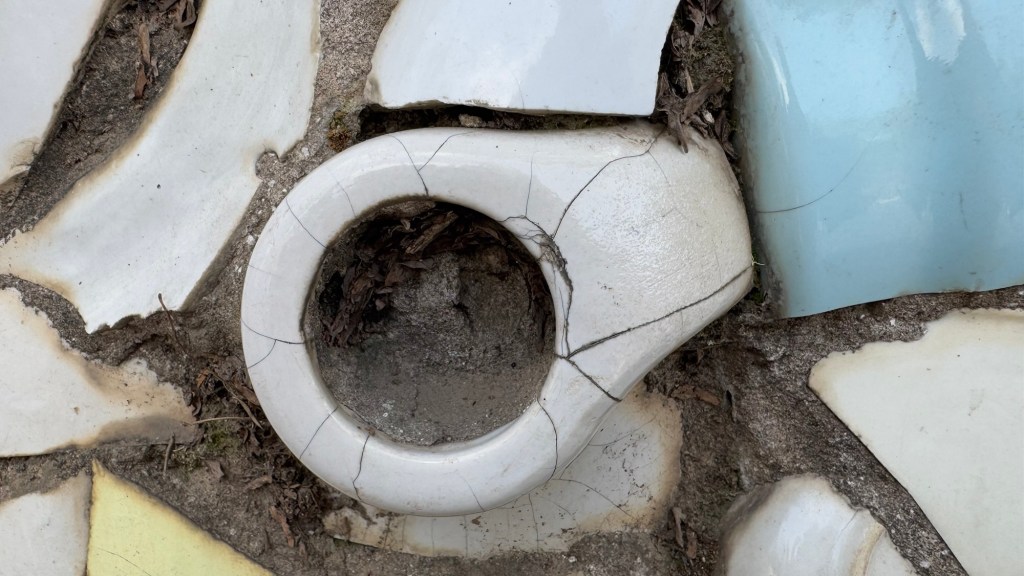


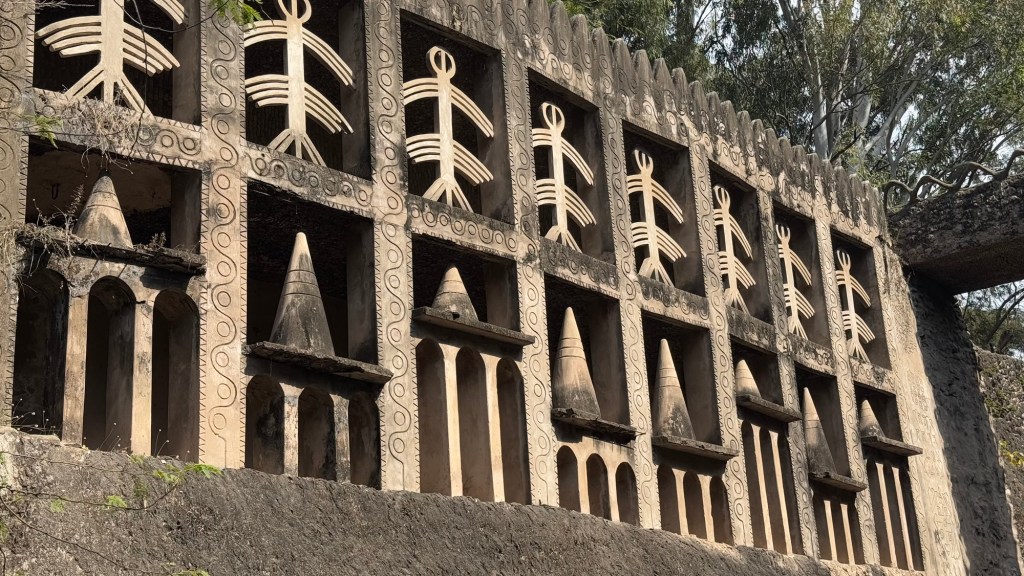


We were drawn along by the sound of water and we’d turn a corner to find a pool with a fountain or a small cascade tumbling down the steep stone sides. Atop the walls are small pavilions or houses – as though the garden were inhabited by an invisible – or very shy miniature population. Further along the paths we were confronted by huge walls of water tumbling down from great heights. The size and scale of the rock garden, created largely by one man at the start is quite remarkable. Although this isn’t a garden in the traditional sense with plants, the greenery is provided by the forest that envelops the rock garden – and which for so many years helped keep its secrets.


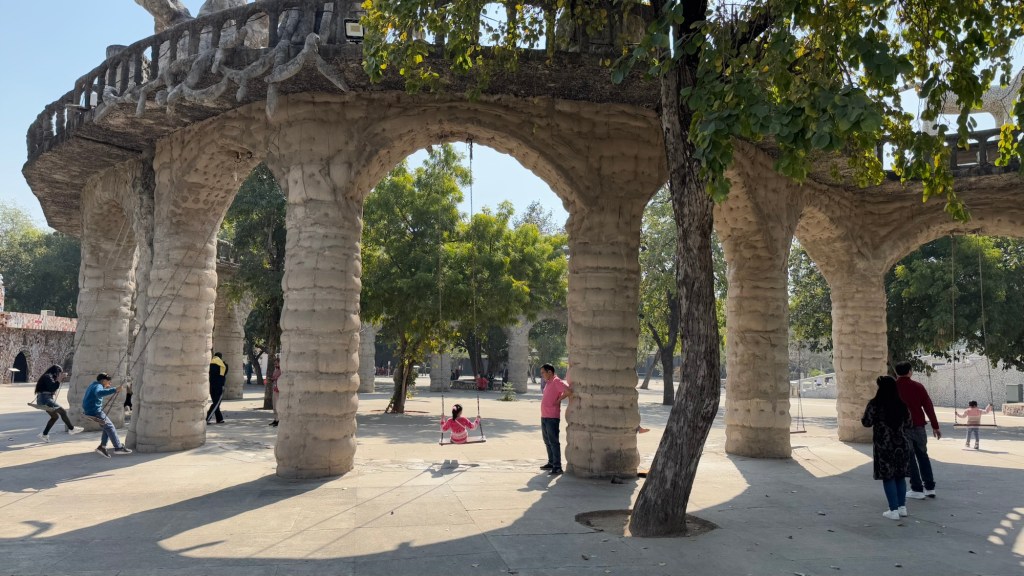


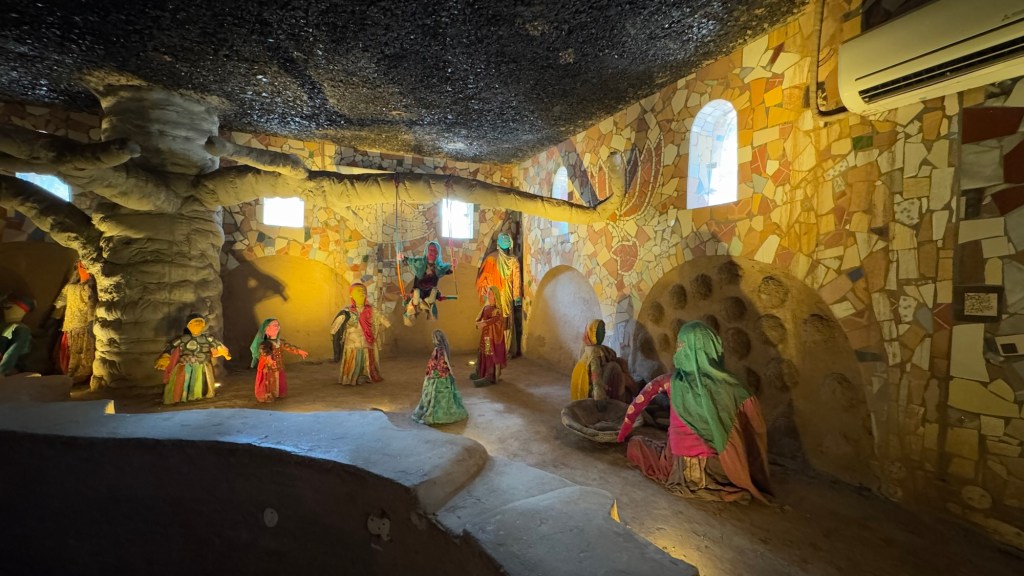


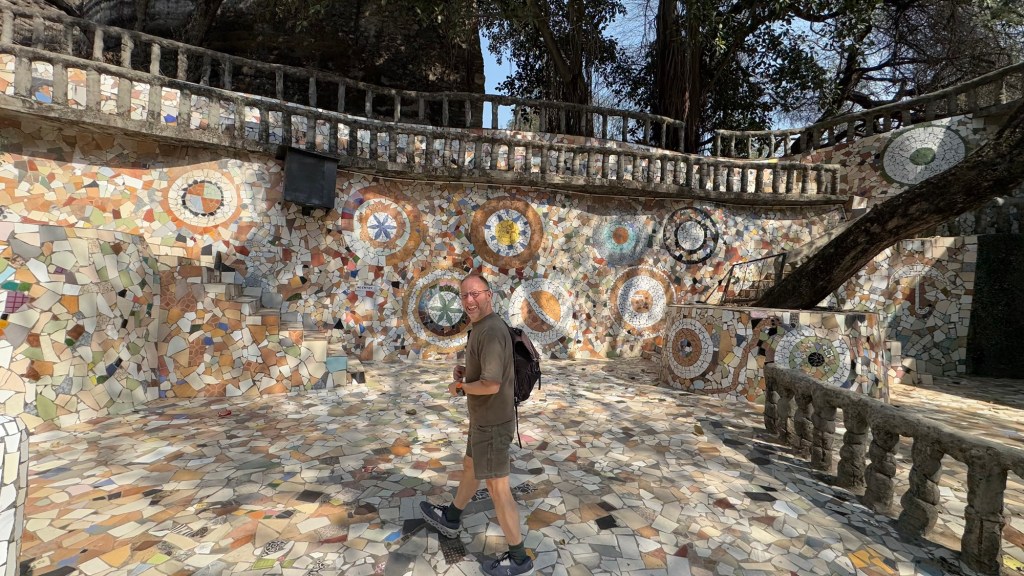



Towards the end we came to a third section of the garden that was built after the local government gave its support. It is larger with wider paths that lead to a big wide open space with a ‘fun mirror’ arcade and large arches with swings hanging from them – a real pleasure garden. There’s a stage and amphitheatre for performances and a ‘rag doll cave’ a sort of modern day grotto.
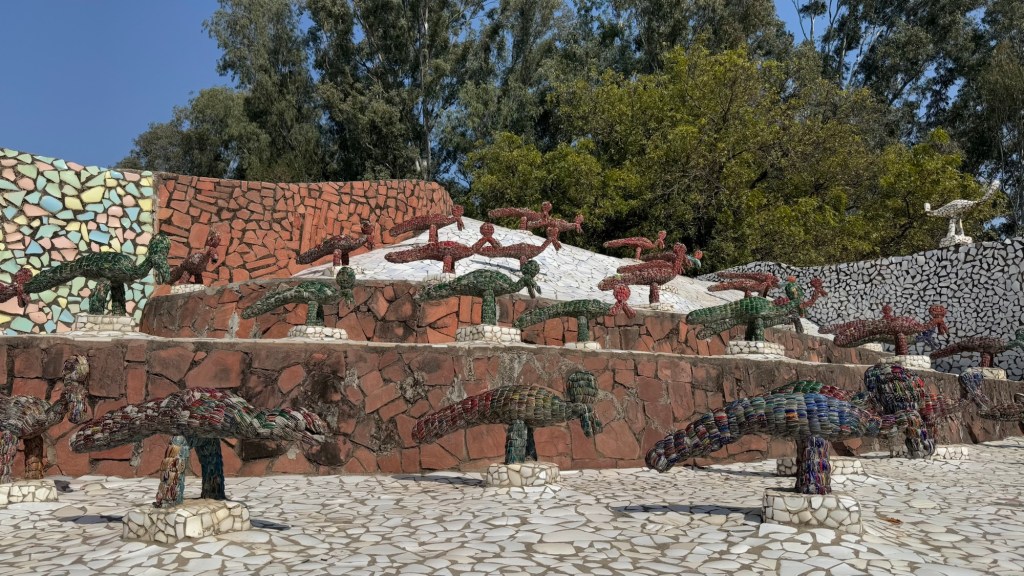

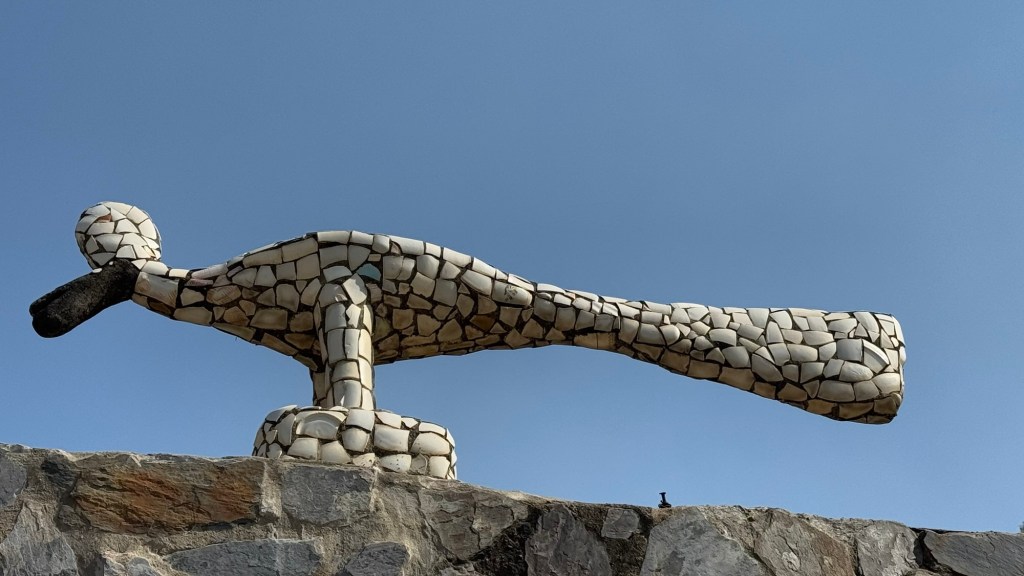


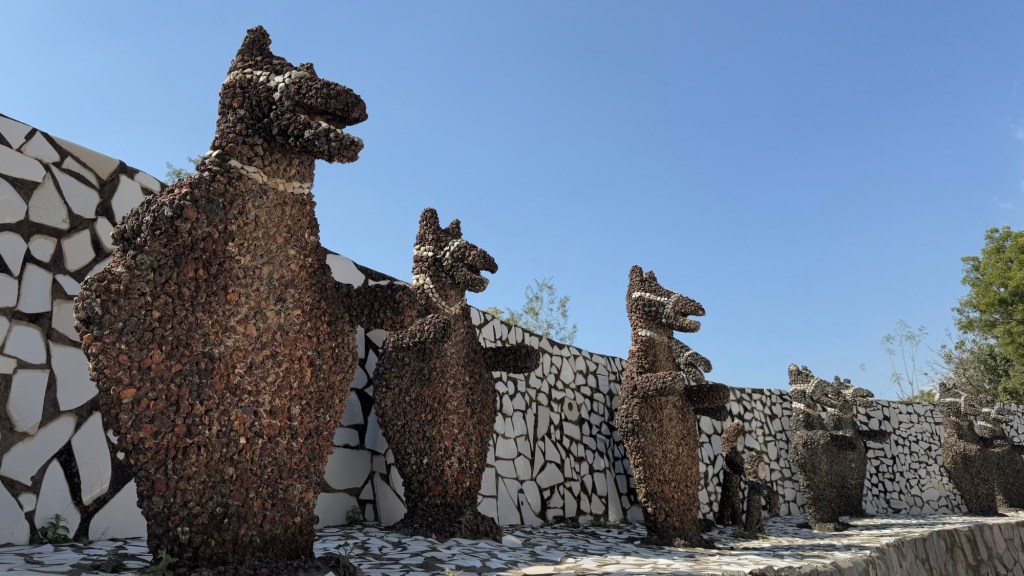


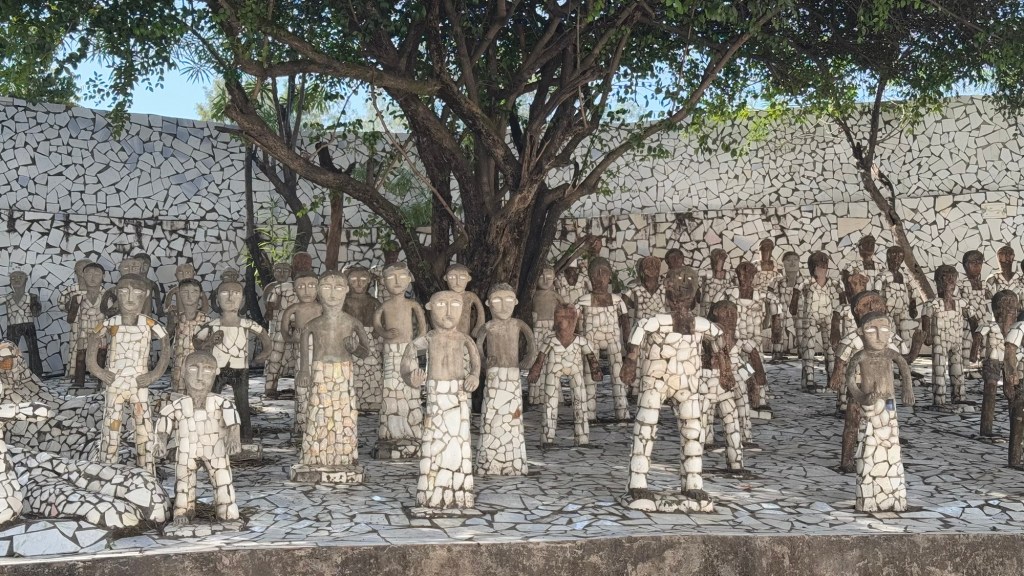

The final part of the garden is a whacky arrangements of sculptures of people and animals all made of concrete and mosaic of broken waste ceramics. There are hundreds of them. Row after row of little men, women, deer, cats, dogs and numerous other real and fantasy creatures. We absolutely loved this garden – it’s almost worth the trip to India alone. I’d highly recommend it (even without a concrete cows).
 Matthew and Mike Travel from Bristol